Mount Kilimanjaro, Africa's highest peak, is more than just a stunning mountain; it's a biodiversity hotspot boasting a remarkable array of Mount Kilimanjaro’s unique flora and fauna. Its diverse ecosystems, ranging from lush rainforests at its base to alpine deserts near the summit, support a fascinating tapestry of life adapted to extreme conditions.
Exploring Kilimanjaro's Varied Ecosystems and their Inhabitants
The journey up Kilimanjaro is a journey through distinct ecological zones, each with its own characteristic flora and fauna. The lower slopes are draped in lush rainforest, teeming with life. Here, large trees like camphor and olive provide shade for a vibrant undergrowth. Monkeys swing through the branches, their calls echoing through the dense foliage. Colorful birds flit amongst the leaves, their songs adding to the rainforest symphony.
The Montane Forest: A Transition Zone
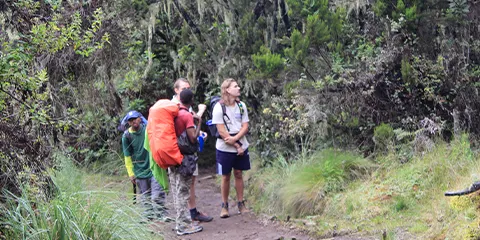
As the altitude increases, the rainforest gives way to the montane forest. This transition zone is characterized by a change in both the Mount Kilimanjaro’s unique flora and fauna. Trees become smaller, more stunted, and adapted to cooler temperatures and higher winds. Here you might encounter the striking giant heather, its purple blossoms a vibrant contrast against the green backdrop. Animals like the elusive tree hyrax and various species of birds continue to thrive in this slightly less dense environment.
The Heath and Moorland: A Landscape of Resilience
Further up, the landscape shifts dramatically into the heath and moorland zone. This area is characterized by hardy vegetation adapted to harsh conditions. Low-growing shrubs and grasses cling to the rocky slopes, their roots anchoring them against the strong winds. The flora and fauna in this zone show remarkable resilience, their adaptations a testament to nature's ability to thrive even in challenging environments. While animal sightings are less frequent here, the unique plants themselves are a sight to behold.
The Alpine Desert: Life on the Edge
Finally, near the summit, the landscape transforms into an alpine desert. This zone is characterized by extremely cold temperatures, intense UV radiation, and limited moisture. Life here is sparse but remarkable. Only the hardiest species of lichen and moss can survive. The absence of larger animals is striking, highlighting the extreme conditions at this altitude. The very existence of these hardy organisms is a testament to the extraordinary ability of life to adapt to even the most challenging environments.
Conservation Challenges and the Future of Kilimanjaro’s Biodiversity
The unique Mount Kilimanjaro’s unique flora and fauna face several conservation challenges. Climate change, deforestation, and human impact threaten the delicate balance of this ecosystem. Protecting this biodiversity is crucial, not only for the intrinsic value of these species but also for the ecological stability of the mountain and the surrounding regions. Continued research, responsible tourism practices, and effective conservation efforts are essential to ensure that future generations can also marvel at the remarkable flora and fauna of Mount Kilimanjaro.