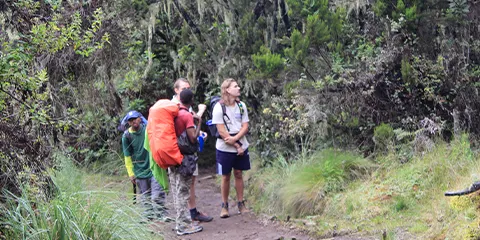
Mount Kilimanjaro, Africa's highest peak, is renowned not only for its imposing stature but also for its incredible diversity of Kilimanjaro's ecosystems. A journey up its slopes is a breathtaking traverse through a series of distinct ecological zones, each a testament to the power of altitude and adaptation.
The Lush Foothills: Cultivated Landscapes and Rainforest
At the base of Kilimanjaro, human activity significantly shapes the landscape. Extensive agricultural practices, including coffee and banana plantations, dominate the lower slopes. This cultivated zone represents a unique ecosystem, blending human influence with natural elements. However, as altitude increases, the influence of human activity diminishes, giving way to the vibrant Kilimanjaro's ecosystems of the rainforest. The rainforest belt, typically found between 1800 and 2800 meters, is characterized by a rich tapestry of vegetation, including towering trees, epiphytes, and diverse fauna. This area experiences high humidity and rainfall, creating a lush and fertile environment teeming with life. The biodiversity here is significant, with numerous bird species and arboreal mammals making their homes amongst the dense foliage. The transition from the cultivated landscape to this rainforest showcases the rapid shift in Kilimanjaro's ecosystems as one ascends the mountain.
The Challenges of Rainforest Conservation
The rainforest ecosystem on Kilimanjaro faces significant challenges, primarily from human encroachment and deforestation for agricultural expansion. Sustainable farming practices and effective conservation efforts are crucial for safeguarding this vital and unique component of Kilimanjaro's ecosystems. The delicate balance between human needs and the preservation of this irreplaceable habitat requires careful management and international collaboration.
The Montane Forest: A Transition Zone
Above the rainforest, the montane forest zone marks a transition in both climate and vegetation. As the altitude rises, temperatures drop and rainfall decreases, resulting in a shift from lush rainforest to a more open, drier forest. The trees become shorter and more scattered, adapted to the cooler, drier conditions. This zone represents an intermediary stage in the progression of Kilimanjaro's ecosystems, illustrating the adaptability of flora to changing environmental parameters. The diverse tree species here offer habitat for a range of animals, some adapted to the cooler temperatures, while others are found transitioning from the rainforest below.
Above the Clouds: Heather and Moorland
The journey further up Kilimanjaro leads to the dramatic shift to the heather and moorland zone. This ecosystem, typically found between 3300 and 4000 meters, is characterized by low-growing shrubs, heathers, and grasses, adapted to harsh conditions including strong winds, low temperatures, and limited moisture. The distinct vegetation of this zone dramatically contrasts with the richness of the lower slopes, underlining the significant changes within Kilimanjaro's ecosystems along the altitudinal gradient. The unique flora here displays remarkable resilience to the unforgiving climate.
The Alpine Desert: A Harsh but Beautiful Landscape
As the summit approaches, the alpine desert zone emerges, a stark and breathtaking landscape. Here, the environment is extremely harsh, with limited vegetation, intense solar radiation, and freezing temperatures. Only the most resilient species can survive in this unforgiving environment. This final ecosystem of Kilimanjaro demonstrates the extraordinary capacity of life to persist under extreme conditions.
The Summit: A Glimpse of Perpetual Ice and Snow
Finally, the peak of Kilimanjaro, perpetually covered in ice and snow, represents a stark contrast to the vibrant ecosystems below. While devoid of plant life, this icy summit plays a crucial role in the hydrological cycle of the region, supplying water resources to the surrounding areas. The dramatic transition from rainforest to snow showcases the incredible diversity and complexity of Kilimanjaro's ecosystems, offering a unique opportunity to witness the power of nature's adaptation to varying environmental conditions. Preserving the integrity of these ecosystems is vital not only for the unique biodiversity they support, but also for the wellbeing of the communities that rely on Kilimanjaro's resources.